

I am starting a project I am almost certainly not qualified for. I have no programming experience. I have a BrainChip Akida 1500, a Raspberry Pi 5 and a small 3D-printed robot arm, and I want to teach that arm to recognise and classify objects.
The rough plan has three steps. First, make the hardware talk to itself at all. Next, build the one-shot image-learning setup I actually have in mind: show the system an object once and have it recognise that object from then on. Finally, put that ability to work on something real. Detours and side projects are very much expected.
This whole undertaking is an experiment. I am not setting out to present a polished product. I want to understand neuromorphic computing and edge AI from the ground up by building with the hardware, without prior programming knowledge to fall back on. I will share what works, and probably much more of what does not. If you have worked with Akida, edge inference or one-shot learning, I welcome every pointer.
Images from the original period
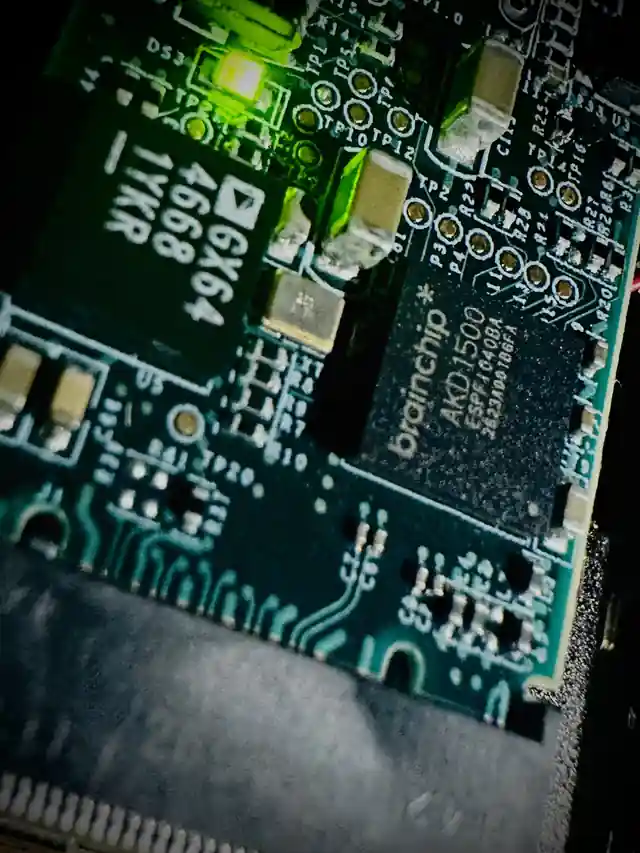
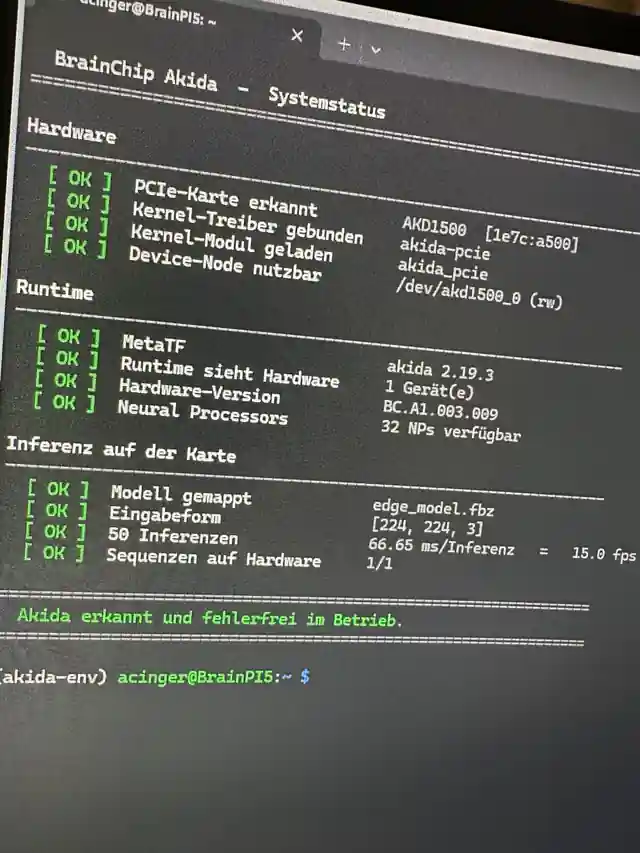
At the time of this announcement, this was a plan, not a finished VORSA inspection cell. The subsequent day-by-day articles show how the first working system developed.